Heating Solutions for Hotels: Why Floor Heating Is the Smartest Investment
If you run a hotel, the best heating solutions for hotels are ones your guests never have to think about. They walk in, the room feels right, and that feeling becomes part of why they come back. When heating fails, even quietly, it shows up in reviews, occupancy rates, and your energy bills.
Most hotels in India are still using systems that underdeliver on all three. This blog breaks down exactly why, and why radiant floor heating is increasingly the first choice for hotel owners who are serious about guest experience and operational efficiency.
Why Traditional Hotel Heating Keeps Falling Short
Split ACs on heat mode. Fan coil units. Portable room heaters. These are the most common heating approaches across Indian hotels right now.
They work. Sort of.
Uneven heat distribution means guests keep adjusting the thermostat. Every adjustment drives up energy consumption. A guest who is cold near the window and warm near the AC is not comfortable, and an uncomfortable guest does not leave a good review or book again.
Forced air systems circulate dust and dry out the air. For guests with allergies or respiratory issues, that is a real problem. For hotels maintaining a premium feel, it is a quiet reputation risk that shows up in feedback more often than most managers realise.
Wall mounted units and radiators restrict interior design and take up space. In a premium room where every detail matters, a bulky heater on the wall works against the aesthetic you have invested in. Add ongoing maintenance costs for filters, motors, and servicing and the real cost of conventional hotel room heating adds up significantly over a full season.
What a Floor Heating System Does for Hotel Owners
A floor heating system for hotels eliminates most of these problems in a single installation.
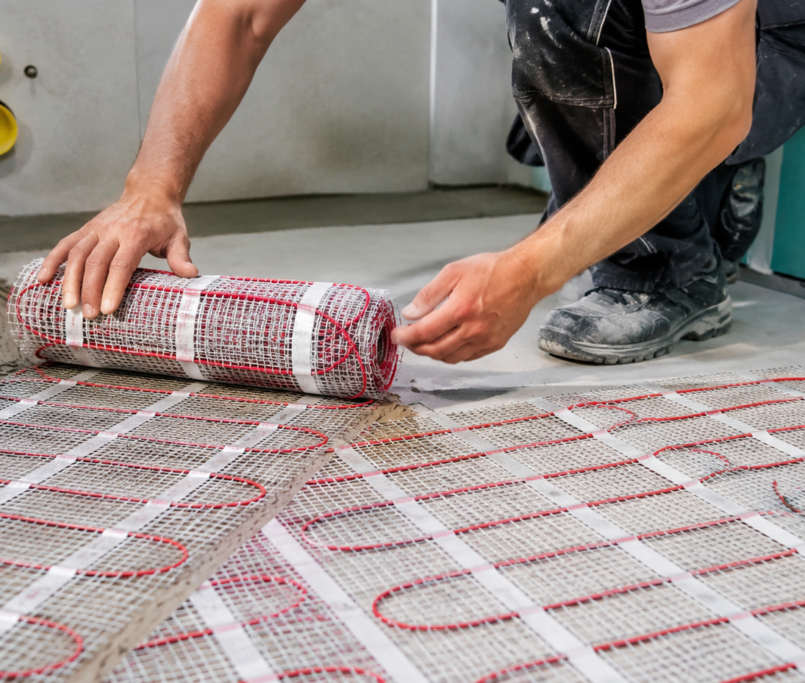
The floor itself becomes the heat source. Warmth radiates evenly upward across the entire room. No hot spots, no cold corners, no noise, no visible equipment. Guests stop adjusting the thermostat because the room simply stays at the right temperature.
For hotel owners the operational advantages are direct. No wall units means complete design freedom. No forced air means better air quality. Even heat distribution means lower energy consumption because the system is not overcompensating for uneven heating.
As one of the best heating solutions for hospitality properties today, underfloor heating for hotels delivers on comfort, aesthetics, and energy efficiency together. That combination is rare and it is why more properties across India are making the switch during renovation cycles.
Where Floor Heating Makes the Biggest Difference
Guest Rooms: Comfort That Shows Up in Reviews
A guest stepping onto a warm floor first thing in the morning has a fundamentally different experience than one stepping onto cold marble. That difference shows up in reviews. Rooms with hotel room heating done through radiant floor systems consistently score higher on comfort, even when everything else in the room is identical to the property next door.
Warm floors also mean guests are less likely to run heating all night on maximum, which saves energy without anyone noticing.
Bathrooms: Hygiene, Safety and Guest Experience
Bathroom floors in hotels take moisture all day. Cold floors stay wet long after a guest showers. Wet floors are a slip hazard, and slip hazards in hospitality are a liability issue, not just a comfort one.
There is a deeper issue. Cold, consistently damp surfaces are where bacteria build up. Grout lines, corners, around drains and fixtures. Surfaces that never fully dry between uses create conditions where bacteria, mold, and mildew grow steadily. Warm floors dry out faster after every use. Less lingering moisture means bacteria have far less opportunity to take hold. For hotels where hygiene inspections affect star ratings and guests mention bathroom cleanliness in reviews, bathroom floor heating delivers a daily operational advantage without any extra effort.
Lobbies and Common Areas: First Impressions at Scale
Large tiled or stone lobbies are almost impossible to heat evenly with conventional systems. Radiant heating in hotel lobbies handles open areas efficiently because heat rises naturally and fills the entire space. Guests walking through a warm lobby on a cold morning register the quality of the property immediately, even if they cannot explain why.
Spa and Wellness Facilities: The Expected Standard
Spa areas, steam rooms, and poolside changing rooms are wet and cold by design. Floor heating services in wellness facilities provide consistent warmth without adding visible equipment or noise to spaces that need to feel calm and clean. For hotels with spa facilities, warm floors are not optional. They are what guests at that level expect.
Energy Costs and Operational Control
The first question hotel managers ask is about electricity bills. It is the right question.
Modern hospitality heating systems based on floor heating heat up fast and maintain temperature efficiently. They are not drawing full power continuously. Pair them with smart zone controls and you heat only occupied rooms. Off peak periods, empty wings stay off. Check in windows, rooms reach temperature automatically before guests arrive.
A hotel managing heating this way spends significantly less than one running split ACs across all rooms regardless of occupancy. Floor heating experts who design hotel systems account for occupancy patterns, room sizes, and seasonal usage to make sure the energy profile makes financial sense for your specific property.
Installation: Practical Realities for Hotel Owners
Floor heating installs before the final floor layer during renovation or new construction. For existing properties, bathrooms are the most practical starting point since they are already being refitted during normal maintenance cycles.
Individual room installs typically complete in one to two days. Larger properties work best with a phased approach, one wing at a time, so the hotel keeps running with minimal disruption to occupancy and revenue.
Choosing the Right Floor Heating Experts for Your Hotel
A poorly designed system wastes energy and underdelivers on comfort. The system needs to be properly sized for each room, each floor type, and how that space actually operates through a full season.
EcoWarmth Solutions works specifically with hospitality properties across India, from boutique hill station hotels in Himachal Pradesh to large commercial hotels in Delhi NCR and metro cities. Certified Danfoss partners, with end to end service from design through installation and ongoing support.
If your hotel is planning a renovation or you want to understand what floor heating solutions for hotels would cost and look like for your specific setup, talk to us first. No obligation, just a straight conversation.
Get Free quote
Call Us +91 8770123977 or email hello@ecowarmth.in
FAQs: Heating Solutions for Hotels
Yes. From boutique guesthouses to large five star properties, underfloor heating for hotels scales to any size. Electric systems work well for targeted installations like bathrooms and suites. Hydronic systems suit large scale new builds or full property renovations where a central system is being installed anyway.
The cost depends on property size, floor types, and system chosen. The more relevant question is payback period. Hotels that switch from conventional systems to zoned floor heating system setups typically see measurable reductions in energy costs within the first full winter season. We give a full itemised quote after a free site assessment.
Yes. Phased installation means you work wing by wing or floor by floor. Individual room installs take one to two days. With proper project planning, most hotels complete installation across multiple renovation cycles without significant impact on occupancy.
Virtually none. Once installed, a floor heating system has no moving parts, no filters to clean, and no motors to service. The main maintenance requirement is the thermostat, which is straightforward and rarely needs attention. This is one of the reasons hotel operators prefer it over conventional systems for the long term.