Electric Underfloor Heating System: Everything You Need to Know Before You Install
An electric floor heating solution warms the floor itself from underneath so the entire room feels different the moment you step in. No visible equipment, no noise, no cold corners. Just consistent warmth from the ground up, every morning, all winter long.
Before you install one though, there are things worth knowing. How it works, what type suits your space, where it makes the most sense, and what it actually costs to run. That is what this blog covers.
What Is an Electric Underfloor Heating System?
Simple version: heating elements go under your floor. When you switch them on, the floor warms up. That warmth rises naturally and heats the whole room from the ground up.
An electric underfloor heating solution works with most common floor surfaces. Tiles, marble, stone, engineered wood, laminate. The element sits between the subfloor and the finished floor surface.
How It Actually Works
Electric resistance heating is the same principle as a kettle element. Current passes through a resistive cable, generates heat, and that heat moves into the floor above it.
Because the heat source is spread across the entire floor area, the warmth distributes evenly. No hot corner near a radiator. No cold patch on the other side of the room. The whole floor is the heater.
A thermostat controls it. Set the temperature, set the schedule, done. Modern electric under floor heating solutions come with smart thermostats that connect to your phone. You can control rooms separately, track usage, and set the floor to warm up before you get out of bed in the morning.
Cables or Mats: Which One Do You Need
This is the practical choice most people face.
Heating cables are loose and laid out in a pattern before screeding or tiling. More flexible for odd-shaped rooms and full renovation projects. Good for new construction where the floor build-up is being done from scratch.
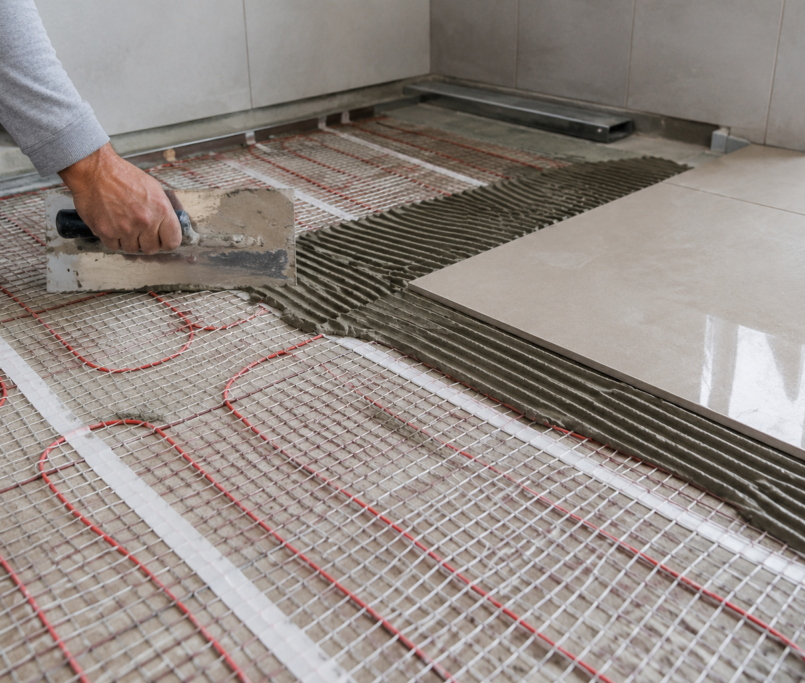
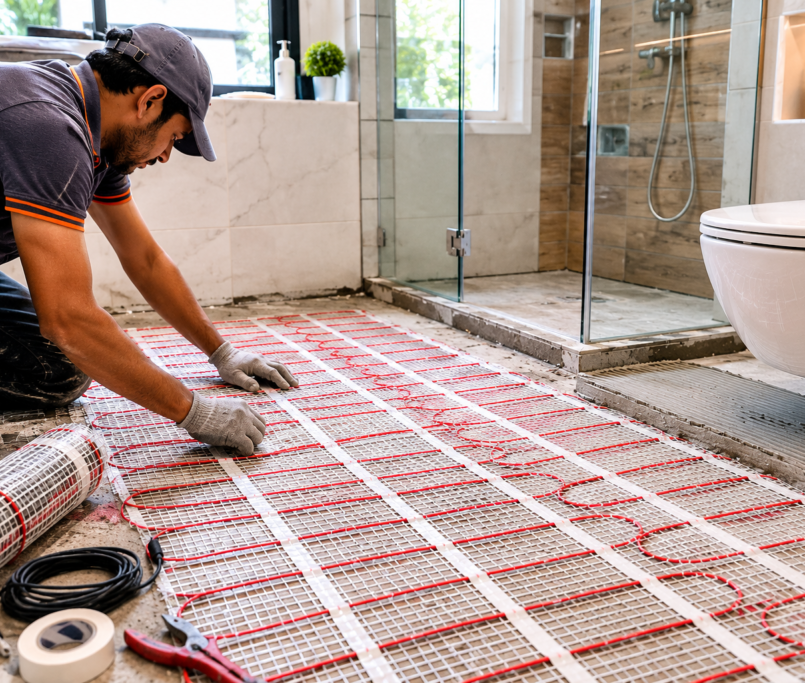
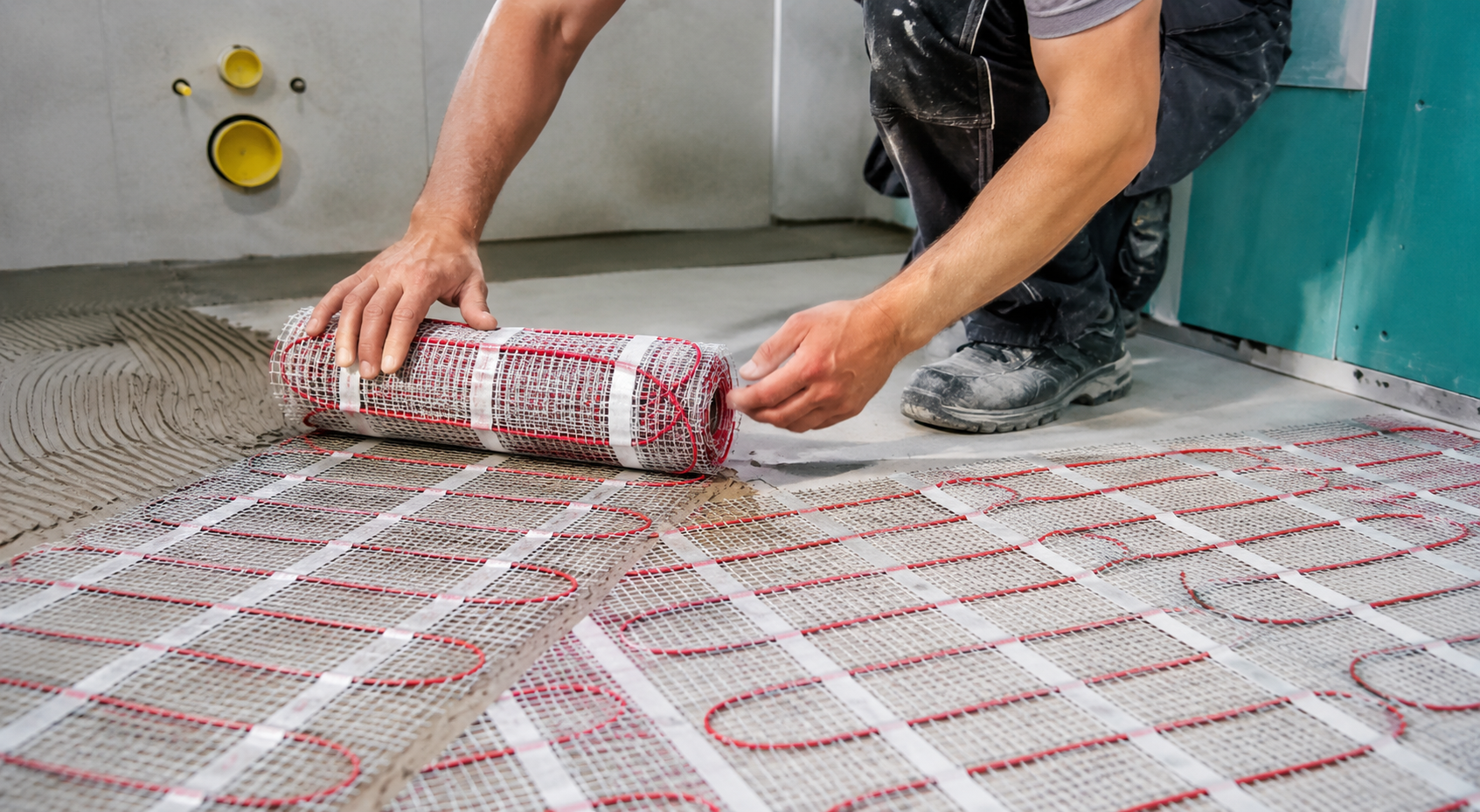
Heating mats are cables fixed onto a mesh backing. They come in set widths and go down fast. Most bathroom installs use mats because they are quicker and the room turnaround is short.
Both do the same job. The choice depends on your room shape, floor type, and what stage the renovation is at. If you are unsure, any decent floor heating experts will tell you which one makes sense for your specific space.
Why It Works Better Than Conventional Heating
The honest answer is that most conventional heating is bad at the actual job.
Room heaters warm the air near them. The moment you move away from one, you feel it. Radiators do the same. Forced air systems blow dust around, dry out the air, and still leave cold corners. You end up adjusting the thermostat constantly, which drives up bills without actually making the room comfortable.
Underfloor heating does none of that.
The heat comes from everywhere underfoot. The room reaches an even temperature and stays there. No dust circulation, no noise, no cold spots. Guests in hotels with warm floors rate their stay higher. Homeowners who install it rarely go back to conventional heating.
There are other things that matter too. Bathrooms especially. Warm floors dry out faster after use. Less moisture pooling means less slippery surfaces, less mold in grout lines, and less bacteria building up in the corners and around drains. For families with young children or elderly relatives, that is not a small thing.
Where Floor Heating Works Best
Bathrooms are where most people start. Cold tiles, moisture, and the need for a clean finish. The install is quick, usually half a day, and the difference is immediate.
Bedrooms with stone or marble floors are a natural fit. Cold floors first thing in the morning affect your entire start to the day. A warm floor fixes that permanently.
Living rooms and open plan spaces work well because the system handles large areas efficiently. No single heater trying to push warmth across a wide space.
Kitchens are harder floors, high foot traffic, and the need for a clean look. All three make underfloor heating the right call.
Key Things to Consider Before Installation
Timing matters most. The best time is during a renovation before the final floor layer goes down. That costs significantly less than retrofitting later.
For existing floors, a bathroom refit is often the easiest entry point. Bathroom floors get replaced regularly anyway so the opportunity comes around naturally.
Floor type matters too. Most hard surfaces work well. Very thick natural stone takes a bit longer to warm up but still works fine. Carpet works in some cases but needs the right type, low tog rating, not a thick pile.
Room size and heating load need to be calculated properly before anything goes in. Get this wrong and the system either does not heat the room properly or runs inefficiently. This is exactly why working with experienced floor heating experts from the start saves money in the long run.
FAQs: Electric Underfloor Heating
Less than most people expect. A bathroom running a few hours a day costs a small amount daily. Larger rooms cost more but paired with a smart thermostat that only heats occupied rooms, most people find it comparable or cheaper than their old setup.
Sometimes yes. Ultra-thin mats can go directly over existing surfaces with minimal floor height increase. Whether it works depends on door clearances and the specific situation. Worth a site visit to confirm.
Yes. Systems designed for wet areas include overheat protection and ground fault circuit protection. Installed correctly by a qualified team, they are completely safe.
Thinking About Installing?
The difference between a system that works well for years and one that disappoints is mostly about correct sizing, right product choice, and proper installation. None of that is complicated when you work with the right people.
EcoWarmth Solutions is a trusted provider of floor heating systems in India, serving homes, hotels, and commercial properties across Delhi NCR, Chandigarh, Shimla, Manali, Dehradun, and across the country. Certified Danfoss partners with end to end support from design through installation.
Call +91 98189 58882 or email hello@ecowarmth.in for a free consultation.